July 6, 2011
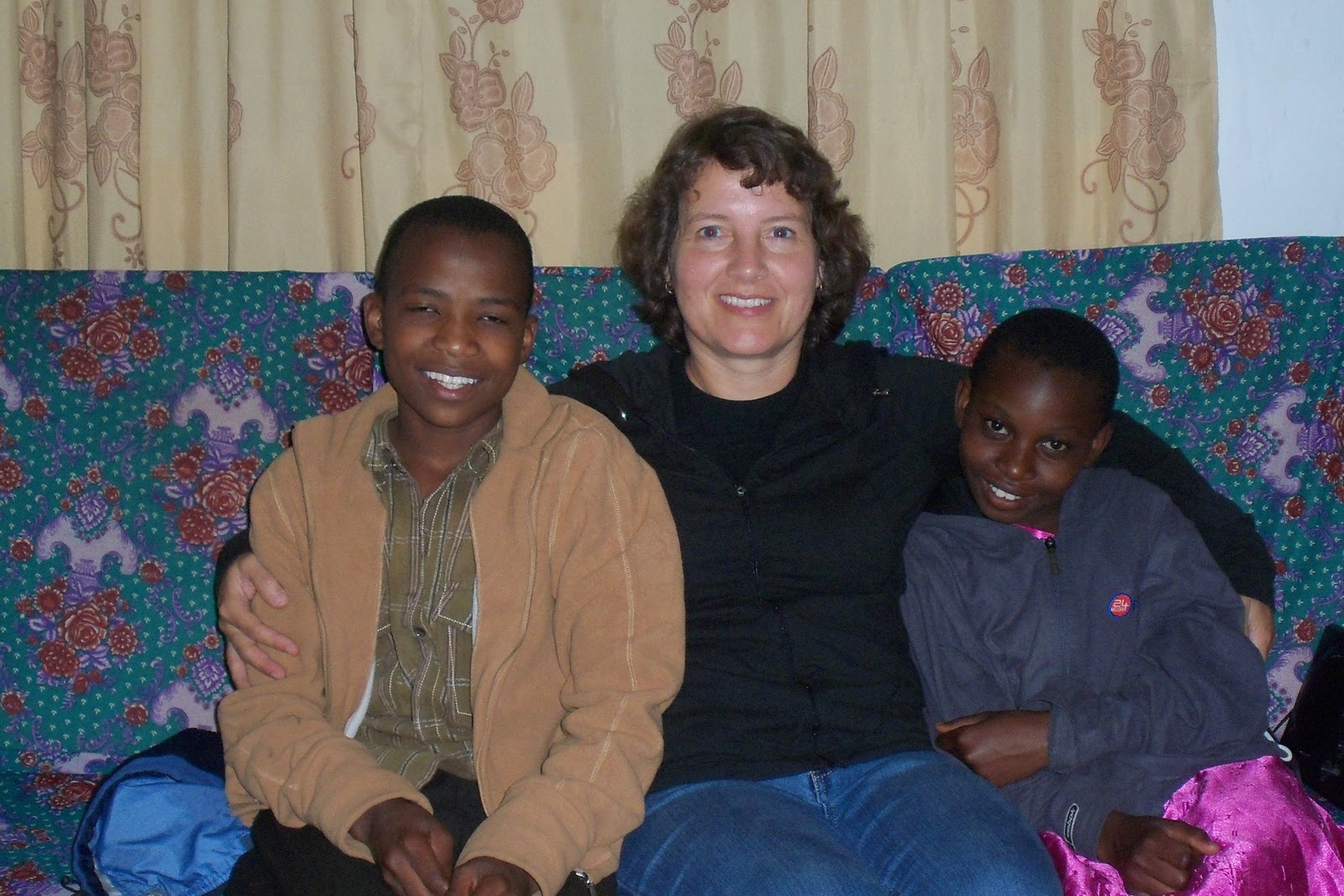
I have always been an avid reader and have read many types of books; however my favorite have always been the ones in which goodness prevails over evil, problems find resolution, and stories have happy endings. Maybe because of my optimistic outlook on life, I want to believe that this is reality, but I have lived long enough to know that life just does not unfold that way. Often it seems that unfairness and injustice are the victors in most cases. Problems may be resolved but are soon replaced by new ones. Brief respites of happiness are inevitably followed by periods of pain.
My work here in Tanzania will soon be finished, and I desperately want to reassure you, as well as myself, that all of the people that I have written about will live happily ever after. However, I cannot. After all, this is real life and these are real people. I cannot tell you how their stories will conclude. My task was to plant the seeds; I was never meant to stay and watch them grow. The rewards of the harvest are for God alone.


The sadness I feel at the thought of leaving those whom I have come to love is abated by my joy at the prospect of returning home to those I love equally as much, or even more. Still, I struggle to say good-bye, because I know how difficult it will be for the ones I leave behind. My heart especially aches for Yudathade and Neema.
I remember the day when I first went to greet Yuda at his home far up the mountain. He was a ragged looking, hungry little boy, living alone with no supervision and no love. He was a child raising himself, facing all of his fears alone. However, it was not his circumstances that were unusual. There are many orphans in Tanzania living in similar or even worse conditions. Rather, what is extraordinary is how dramatically this child’s life was changed. I do not believe it was by luck or chance. I believe it was by the hand of God. It was a modern day miracle.
 In the time that I have known Yuda, I have always sensed that the thing that he needed most from me was a mother’s love. The memory I will always cherish of Yuda is the one in which I opened the door one morning and saw him standing on my porch, a big smile on his face, joy in his eyes, happy to be “home” for the holidays. This is what he needed; this is what he will lose when I go. Yuda has lived without a mother for so many years that he does not even remember when she died. I glimpsed the depth of his pain when we went to the local church office to obtain a copy of his baptismal card so that he could apply for a copy of his birth certificate. The sister in charge may have been kindly, but sensitivity was not her strength. As she filled in Yuda’s card, she looked at his name and said, “What kind of name is this? Why would your parents name you Masumbuka (his tribal name)? It is not a good name. Do you use that name at school? If you do, you will not have a good life. Choose a different name.” Yuda was speechless. Aggie turned to me and said, “Madam, choose a new second name for Yuda. Sister does not like the one his parents have given him.” While my mouth was still hanging open in surprise, Sister began throwing out some names: Amani (peace), Baraka (blessing). Yes, that was the one: Baraka. Yuda and I both liked it. He had been blessed and he was a blessing. Sister recorded his new name: Yudathade Baraka Liberathi Swai.

Sister continued to talk. Next, she asked Yuda about his parents, and he told her he really didn’t remember them. She said, “What do you mean you don’t remember them. How long have they been dead? Who has been taking care of you? What do you mean by no one? Surely you cannot have been living alone, you are only a child. Maskini! That is a terrible thing!” I looked over at Yuda and tears were streaming down his face. I moved my chair closer so that I could put my arm around him. I wanted him to feel my love. I wanted him to know that I cared, even though I wondered how much comfort it would be, because soon I would be leaving him as well.
 Although I feel bad about leaving, I know that Yuda has hope now for his future, and hope is a powerful motivator. Believing that his dreams are possible brings him closer to actually achieving them. He goes to a good school, and his performance has improved remarkably in the year that he has been there. He has food to eat every day. He has books. He has nice clothes. He even has pocket money. Aggie and Fidesta love him, and I have reassured him that we would continue to support him from America. Yudathade, the rich little orphan boy: God has certainly blessed him.

 I cannot help but contrast his case with Neema’s. Neema, whose name means “Grace of God,” is not an orphan. She has a mother, a mother who would not or could not provide for her and never even sent her to school. Now Neema must do housework for a relative who beats her if she does the slightest thing wrong. I wonder if she has ever been loved. Neema and Maria recently came to visit me here in Mkuu. I know it was only a brief respite, but Neema was able to rest from all her troubles for an entire week. Aggie and I stuffed her with food and ripe avocadoes, hoping that she would gain a little weight. Neema was in paradise. Maybe for the first time in her short life, she was able to just be a child. She laughed and joked, she sang songs and danced, she colored pictures and watched cartoons, but mostly she enjoyed the love. Although she is almost 13, she held my hand whenever we went walking. She sat close to me whenever she could. She hugged me and prayed for me every night before we went to bed. Neema does not speak English, so I decided to write her a letter in Kiswahili to remind her that God had not abandoned her. I had a Native American “dream catcher” key chain that one of you sent me in a package, so I decided to give it to her. If she hides it well, maybe it will give her courage and strength when life seems especially difficult and dark. I explained the legend of the dream catcher in the letter. Neema is not a good reader (remember she just started school about a year ago), so I asked her if she wanted me to read it to her. She eagerly said “Yes!” As I read her the letter, I felt her begin to shake. I glanced over at her and saw that she was silently sobbing. I finished the letter and then we just sat for the longest time, me holding her in my arms and kissing the top of her head. I could feel her pain radiating out of her. I wished that I could absorb it all, but it was not possible. Her well of sorrow is very deep.

In order to catch the bus back to Morogoro early in the morning, it was necessary for the girls and I to spend a night in Moshi. That experience was another treat. While doing a bit of shopping, I noticed a store with a sign saying: We will test your eyes for a good price. I had suspected that Neema needed glasses, so on a whim, I took her in to be tested. I was right. We ordered her glasses (less than $20 USD) and were told to come back in 2 hours. We went to a restaurant and indulged in chipsi kuku (fried chicken and fries), picked up the glasses, and then returned to the hotel to watch TV. Maria also took 2 or 3 warm water showers, something she had never done before. The next morning I escorted them to the bus stand, carrying their big bag on my head. (It really is easier than trying to carry a heavy load with your arms). As we waited for the bus, Neema asked me if I would be coming to Morogoro again before I return to America. I told her probably not. Then she began to cry. I held her close and told her I loved her, but inside my tears were flowing for her too.
 You see, while Yuda has hope, Neema has none. She struggles to learn in a poor government school. To others it may not seem like much of an accomplishment, but last year she was number 47 out of 49 students. This year she is number 30 out of 35. Yuda most likely will pass his exams and go on to A-level studies. The chance of Neema passing her primary school exams and being selected for secondary school studies is very slim. Hopefully she will at least learn to read and write. How she will support herself in the future, I have no clue. While Yuda has no parents, he at least has Aggie and Fidesta to love him and take care of him. Neema has no one. At the end of the school day, she goes home to cook and clean for people who mistreat her. She has no time to study. Aggie and I have talked about trying to find her a private boarding school, but it would have to be a very special school with loving, caring teachers. She is almost 13 and only in the 4th grade. She needs a lot of individual help and attention. I wonder where I would find that in Tanzania, and if I could, would her family let her go? I so want her story to have a happy ending, but I am afraid it will not. Only God can move her mountain and if he does, it will truly be a miracle.


