Wednesday, October 27, 2010

Readjustment

  October 27, 2010

I have been back at Mkuu now for more than a week, and at times I wonder if I ever really left.  Maybe I only dreamed that I did.  Was I really in America for an entire month, or was it just another crazy fantasy like the time that I dreamed that I flew home to get my hair cut at Great Clips? (maybe it was a $5.99 special). If it was a dream, then it was a very pleasant one.

America, the beautiful!  So green and so clean!  I did not have to wade through any mud or breathe any dust-laden air.  There was always a place to put my trash, and I had electricity and hot, running water every day!  I did not have to ride any buses, but if I had, I am sure that I would not have had to share my seat.  There would be a space for everyone.  Actually, riding in a car (or driving one; that skill must be instinctive after almost 34 years) was pure luxury.  Although, I was rather embarrassed to find myself driving from one store to another across a large parking lot.  In America, anything that I wanted, I am sure I could find, especially food.


Is America obsessed with food?  In Tanzania, it is rare to find a small "supermarket."  In the Cary area, there seems to be one on every street corner, each with aisles and aisles stocked with goods.  How many brands of cereal do we really need? I must admit, I did appreciate the variety; something different to eat everyday.  My first taste of non-Tanzanian food was on the plane: scrambled eggs (when did scrambled eggs become white), sausage, yogurt, fruit, and a small pancake.  What a treat!  Airplane food and I loved it!  How sad.

The thing that bothered me most about our food, however, was that we eat too much and we waste too much.  My kids took me to Jason's Deli for lunch one day, and I ordered my favorite sandwich: a reuben.  There was more meat on that one sandwich than I eat here in a month.  At another restaurant, I ordered a salad.  It looked big enough to feed a family of six or eight.  I could not even eat it all.  That made me think of my little "watoto wachafu" (the dirty little children, dressed in rags, who come to my house to greet me) whose eyes light up when I give them each a finger-sized banana to eat. Imagine if they had even a portion of this food?  Even now, as I write this, I am thinking about pizza, reubens, steak, ice cream, even just a small bowl of raisin bran with milk.  Food in Tanzania is not very exciting, but then most people here "eat to live, not live to eat".


It was nice being back in a place where I understood the language and could actually take part in real conversations.  Although, I am sure that during the early days of my visit, some of you may have detected traces of "special" English in my speech.  I am happy to have seen so many of you, and I am very grateful for my friends.  However, I did notice quite a big difference in casual interactions between people in each country.  In Tanzania, when I go anywhere at all, people always stop to greet me.  This is their custom; it is not just because I am a "mzungu."  They shake my hand, maybe double hug me, and ask about my day, my health, my family, my job, and about many other things which I still consider my personal business.  Then many will ask for a small handout (that is because I am a "mzungu"). Sometimes these encounters are exhausting, but I have realized that they also make me feel less isolated in a place where I really am different and alone.  In America, I did a lot of walking (for fun not necessity) and as I passed people, I would smile and say "hello" or "good day."  I was quite surprised by the number of people who avoided eye contact and walked by without saying a word.  Are we so busy that we have forgotten how to be polite?

Before my trip, my students asked me which country I liked better, Tanzania or the United States.  I told them that, of course, Tanzania is a beautiful country.  The people are very friendly and the animals are amazing.  However, America is my "homeplace," and I love my home.  (Even though I was a bit of a nomad during my visit, because I no longer have a house of my own, but a "house" does not really make a "home").  My trip was wonderful.  It was just what I needed to re-energize me for another year of service.  My dad continues to improve, and on the last day of my visit, he was allowed to come home.  For the first time in many years, I saw a bit of lingering color in the autumn leaves of upstate New York.  I got my hair cut (at Great Clips of course) and I gained back a bit of weight. I indulged in conversations, watched TV to my heart's content, and played on the computer without racing time.  It was so nice to be home.

My trip back to Tanzania was interminably long (4 days): one day by car to the airport, two overnight flights through London to Dar, and then the longest leg of the journey, a ten hour bus ride from Dar to Mkuu.  However, I received a very warm welcome when I finally arrived.  They were all so glad that I had actually returned.  A few things have changed here, most noteably, the school calendar.  The opening day for A-level has been changed from October 18th to November 2nd.  Not really sure why, but I find it amazing how easily and unexpectedly schedules are changed.  No approval is needed from anyone.  It is just "done".

Fidesta has completed her form 4 exams and now must wait until January or February for results.  Then we will decide which direction her life will take.  (Pray that she is accepted to A-level).  In the mean time, I have sent her to Morogoro to take a short course about computers.  She will stay with Victoria.  She was very excited, because she has never traveled any further than Moshi.

Victoria is facing problems of her own.  The house she is living in does not belong to her.  The owner has rented it out, and now Victoria and the girls will have to leave.  She has a brief reprieve, because the renters have asked that a wall and gate be installed around the property.  Victoria will remain in the house to oversee construction.  Where will she go then?  She has a small plot of land but no money to build a house.  Curiously, I felt an urge to help her, so I sent 500,000 TZS (about $400) with Fidesta.  It should be enough to build a small two-room mud house.  My only request was that Neema and Maria continue to go to school.  Needless to say, Victoria was overwhelmed by the gift.  She said that I was her only "good Samaritan."  Many others, including family and church members, had ignored her plight. 

Aggie will be taking exams in a couple of weeks, and then she will be on break until January.  She has asked me if she could attend "tuition." These are extra study sessions held between terms.  She has been studying very hard and really wants to succeed, so how could I say "no"?  She will follow Fidesta to Morogoro and attend tuition sessions there.  They will return to Mkuu after the new year.

That means it will only be me and Yuda for the holidays.  He will be coming to stay at the end of November.  Fidesta insisted that I make him study, cook and clean.  I will, but I will also give him time to play soccer with the boys. 

So what is it like being back?  What do I look forward to for another year?  Well, there has been no running water in my home for a few weeks now, even though the rains have returned.  There is no dust, but there is plenty of mud.  Mkuu welcomes me home!

Monday, October 25, 2010

Joy

 
September 3, 2010

For the most part, I consider myself a contented person, happy even, at peace with myself and with the world.  However, I was wondering recently if I would recognize joy if I saw it again.  Being surrounded by pain, sorrow, disappointment, frustration, and hopelessness often leaves me emotionally exhausted.  Where is joy?

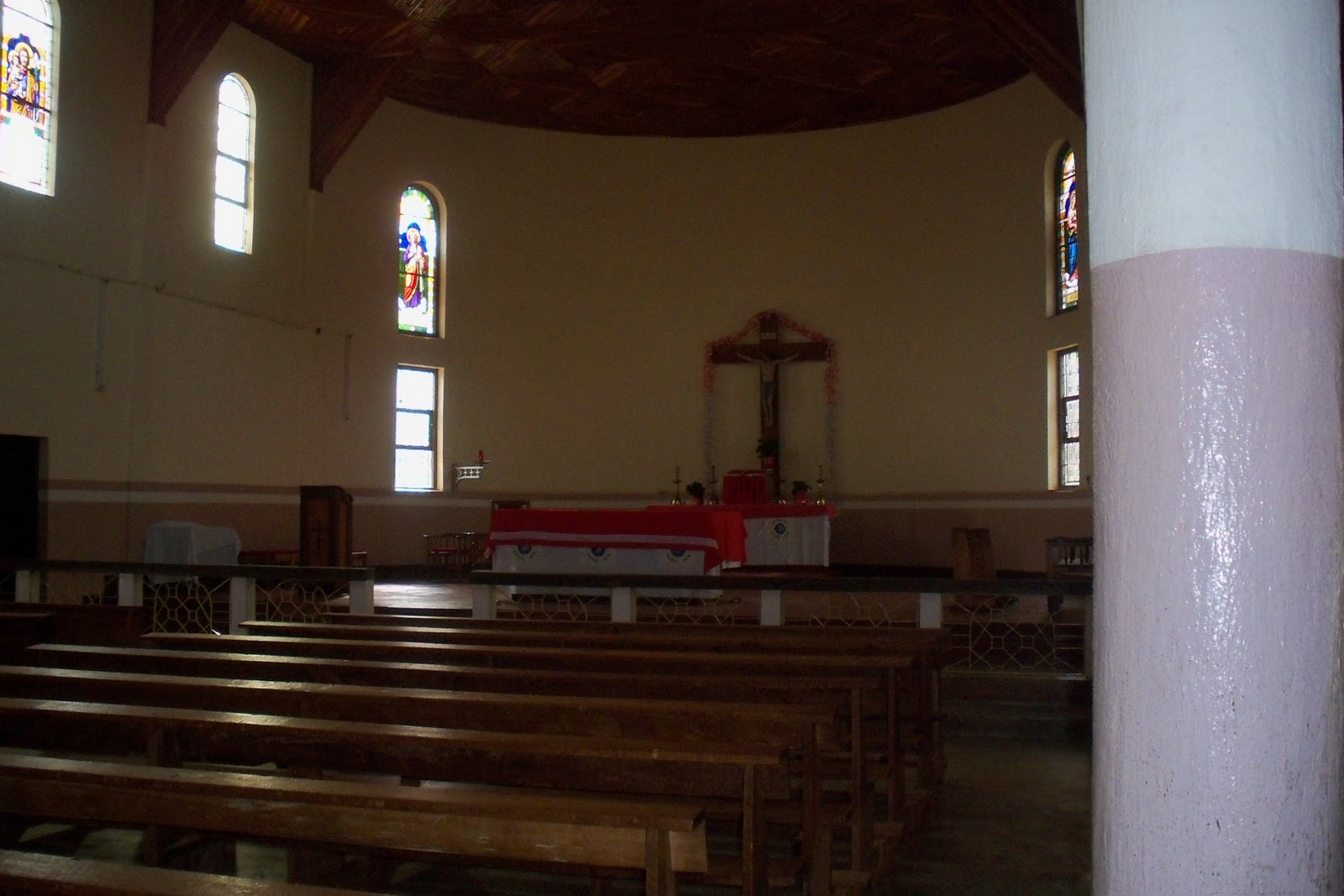
I am going home to visit soon (almost joy level) and I will not be present for Fidesta's form 4 graduation. However, last Sunday there was a celebration to commemorate form 4 graduation from religious studies at the local Catholic Church.  Fidesta invited me to come.  Of course I agreed, not realizing that there would be very few adults present, only those who had been invited to speak and to be guests of honor. The celebration was in the old, small church where we meet for the charismatic service, and guests of honor sat at the head table up on the altar.  I bet you can guess where I was seated, right up there where all could see me.  I really hate being the center of attention, but the seat gave me a good view of all the students.

Fidesta was sitting near the window in the first row.  I tried to blend into the surroundings and just listen and watch all that was happening.  I listened to the speaker and really did not understand much of what he said, other than that it was an inspirational message for these young people who are about to go out into the world on their own.  During the ceremony, I happened to look over at Fidesta, and the sun was shining in that window and was illuminating her face. I saw that she was looking at me.  I smiled at her and her face lit up.  At that moment, I am sure that I saw joy!  She was literally glowing and I marvel at the thought.  Maybe God really has given her a future and a hope.  Maybe God really did hear her praying and sent her His love.  I hope she always remembers that feeling and remains strong in her faith.


While I was sitting there thinking about Fidesta, a thought popped into my head.  (I am sure this is the way God communicates with me).  He said, "give her your necklace."  I have this cross encircled by a heart that I have worn every day since I have been here.  My mother gave me the necklace, and I really love her and I love that necklace.  I tried to argue with the thought.  I told myself that I had already given her a card in which I had written a nice heart-felt message. Wasn't that enough?  Apparently not because again I heard, "Give her the necklace."  I continued to find excuses so that I could keep my necklace.  I would buy her a cross when I go to America.  Wouldn't she like a new one better than mine?  No.  "Give her your necklace!"  After using every excuse and not really believing them myself, I knew what I would do.  As we were walking home, I stopped her and taking off my cross, I explained how much it meant to me.  I told her that I would only be in her life for a short time, and I wanted her to have my cross to remember that her mothers, the one in heaven and the one on earth, love her very much and are very proud of her.  I put it on her, and through her tears, I again saw joy.

Traveling to the market on the bus one day, Fidesta was sitting with a young man and he was crying.  Fidesta asked him what was wrong and he told her that he had come to town to escort his wife and their new baby home from the hospital.  However, he did not have enough money for the bus fare, and they would have to get off the bus and walk the rest of the way home.  Fidesta took the pocket money that I had given her and gave it to that man.  She told me that it had given her a most unusual feeling, because she had never before been in a position where she could give.  Usually she was the one in tears.  I made sure not to replenish her money at that moment, because I wanted her to think about that feeling and keep it in her heart, just as I am hoping she will remember her feeling of joy.

On a lighter note, the children at my aunt's church in New Hampshire donated school supplies to my neighborhood primary school.  Aggie accompanied me to the school, and she insisted on carrying the box on her head.  The headmistress was delighted with the gifts and called an impromptu assembly on the parade ground so that I could distribute them.  Each student received a pencil and a handshake from Mzungu.  Erasers and other things were given to student leaders and other students chosen by the teachers.  There was an old man standing nearby.  I thought he had stopped to watch the celebration and to listen to the enthusiastic shouts of the children.  The headmistress told me to give him a gift and she handed me a pen.  Nice thought, but you see, this man was blind.  Aggie took a picture of me giving a blind man a pen!


My fundi made me a new blue dress.  The girls asked me what style I had chosen.  I said I did not choose.  It would be a surprise.  When I put it on to wear to school, Fidesta told me that if I were to be married in Tanzania, I would be worth no less that 30 cows! (She really knows how to flatter me).  When I walked into my form 6 classroom, all my students were already standing at attention (not common for them) and had their hands over their eyes.  They removed them in unison and said "wow"!  I am supposed to wear this dress to America.

Worship


August 25, 2010

My thoughts seem to be occupied with the thought of being at home (USA) again, taking hot showers, having clean feet, eating pizza and ice cream.  I leave Dar on September 15 heading for London and then on to DC.  It is a 2 day trip home and 3 days to return.  That is not counting the day long bus rides from Mkuu to Dar.

Meanwhile, I continue to throw myself into the experience of living here in Tanzania.  (Aggie and Fidesta said that I am the African and they are the wazungu).  My latest insights are into ways of worship.

Recently, Aggie asked me to join a small community prayer group with her.  She does not know many people here, and I think she wanted my support.  We meet in homes or at the local primary school for about an hour very early (6:30 am) every Saturday morning.  At the end of our first meeting I was asked to host the next meeting.  What could I say except, "Of course, I would love to host"!  I knew Aggie and Fidesta would help me, but Aggie said that I was to do the reading and give the reflection, in KISWAHILI!  That unnerved me a bit, but the reading was short: "Jesus blessing the little children".  That week I wrote my reflection in English, and then translated it into Kiswahlil.  I asked the girls to proof it for me, and they were amazed that there were very few mistakes.  I told them that I write much better than I speak.  (I think that is true in both my current languages).  Saturday morning came and mostly little children attended (seems fitting). I read my reflection, and they seemed to understand what I was saying.  The older girls read over my shoulder.  However, I did not ask for questions because I was afraid I would not understand them.  I like the small group.  The meetings are short and quiet, I understand a few words here and there, and I have to interact with a only few people at a time. 


Now Fidesta has also asked me to join her at a Charismatic Catholic service.  They meet on Saturday afternoons.  In America I attended the Catholic church for many, many years, and for the life of me, I could not even visualize what a charismatic Catholic would be like.  Charismatic Catholic?  Is that an oxymoron?  However, I agreed to go with her.  Aggie refused, and she is Catholic too.  Oh no, what adventure was waiting for me now?

Well, the service was actually more like a contemporary service might be like in our country, only more passionate than any service I have ever attended.  There was much singing and dancing, and you just seem to move about as you feel compelled.  The songs tended to be just a few repeated words, so I was easily able to sing them, or versions of what I thought the words might be. (Who knows what I was really saying).  Prayers were individual prayers spoken aloud (loudly and passionately) in unison.  It was almost like the church was alive.  In America I tend to be on the more inhibited side during church services, singing only loudly enough for me to hear and saying my prayers silently to myself, but by the end of this first service with Fidesta, I definitely felt my level of charisma increasing.  When I come home in a few weeks, you may not even recognize me because I will be so charismatic.  During the service, I was singing and dancing and wishing I could ululate like Fidesta.  (Ululating is making this really loud whooping-like noise by wiggling your tongue rapidly back and forth.  It is an expression of great joy).  Unfortunately, I can barely whistle.  The padre announced each reading and gave us time to look them up in our Bibles.  I looked over the shoulder of the young man next to me to see the verse and then found it in my Bible.  Being able to read the verse in English really helped with my understanding.  At the end of the service, all visitors were asked to stand and introduce themselves.  Everyone was tickled pink when I spoke in Kiswahili, and they all wanted to shake my hand.  After introductions, newcomers were called to the altar.  I thought this was so everyone could see us and greet us. Then someone from the congregation came and stood in front of each one of us.  The kind old gentleman in front of me told me to close my eyes, and then he turned my hands upward and put his hand on my head.  The congregation began praying aloud with the same energetic passion that they had used earlier, maybe even more so.  I am sure that if I had had any demons remaining after my experience in Morogoro or if I had acquired any new ones since, they have now all run away with their tails between their legs.  It was very moving, although I don't understand why the visitors from this past week were not treated to the same experience.  Maybe it had been for my benefit.

On the way home, Fidesta asked me if would I come again with her?  Did I like the service? I told her certainly.  It was a wonderful, uplifting way to worship God through song and dance and prayer. Fidesta really likes charismatic. Others, like Aggie, prefer traditional ways of worship.  Is it not the same in our country?  I guess I like variety, because now I go to small prayer group on Saturday morning, Charismatic on Saturday afternoon, second mass on Sunday morning, and each Tuesday and Friday, as I return from the market, I stop at the church to pray.  However, I must admit that that is my favorite time, because the church is empty and quiet and I am no longer "mzungu".  I am just me, alone with my God.

Field Trip

   August 14, 2010

I have just returned from a field trip to Ngorongoro and Lake Manyara National Parks.  I traveled with the form 3 students who were able to afford the trip, the school secretary, and about 5 other teachers.  I had a great time!  I saw many African animals in both parks and the landscape was amazing, despite the dust.  The parks are actually in a volcanic caldera (crater).  This area (Arusha, Serengeti, Ngorongoro) is also home to the Maasai people.  They are very colorful, interesting people.  Traditionally they were nomadic herders and lived in small, round, grass huts.  They are known for wearing colorful robes and much jewelry.  Some of them have elongated earlobes as a result.  I was able to take a picture of a young Maasai boy.  It only cost me my package cookies.

I have been on field trips with students in America, and in many ways this was similar.  The students were typical adolescents: singing, talking with friends, and making lots of noise on the long bus ride to the park.  We left very early in the morning (3:30 am) on two chartered buses.  They were nicer than the typical town bus in Tanzania, but still, many windows did not close, and many students had to sit on the floor or on other students' laps. Our one bathroom break was a quick stop by the side of the road in the dark, girls to one side, boys to the other. I decided to wait for better accommodations.

We arrived at Ngorongoro between 10:00 and 10:30 am and encountered the first of our financial problems.  The park officials wanted to charge me the "mzungu" price (about $50 park entrance and another $200 to go down into the crater).  That is more than an entire month's living allowance! However, after much negotiation, the second master was able to convince them that I was, indeed, serving Tanzania as a teacher and should not be charged.  (I may speak kiswahili and dress like a Tanzanian, but I still look like a foreigner).  I felt that it was unfair that in both parks, it was much easier for foreigners riding in Land Cruisers to gain entrance (or exit) than it was for groups of Tanzanian school children wanting to learn about their own country.  One group of primary school children could not enter Lake Manyara National Park because the entrance fees were too high.  They did not have enough money, so they had to turn around and go home with a busload of disappointed children.

We ran into a similar predicament.  The trip into Ngorongoro the first day cost more than expected, so the teachers and second master decided to return to school the next day without going to Lake Manyara (the trip was scheduled for 2 nights, 3 days). The students were very upset.  They all walked off the bus in protest.  I told the second master that he had helped me save a lot of money by getting me into the park as a Tanzanian teacher, so I would loan (more likely give) them the money to get into Lake Manyara.  That satisfied the students for the moment.


The crater (caldera) was amazing!  We had to split into two groups (morning group and afternoon group) and ride down in the park bus.  You are not allowed to get out of the bus (wild elephants are especially dangerous) so taking pictures was not easy, but I managed to get some.  However, if you are afraid of heights, you probably would not have enjoyed the trip down into the crater.  The secretary sat beside me with her eyes closed and her lips moving in silent prayer.  The road was narrow and winding and dusty.  The bus was big. The descent was long and steep.  She was afraid that we might take an unexpected short cut to the bottom and that we would not survive.  I told her if that were true, then why worry?  I am not sure if that calmed her, but when we reached the bottom, the trip was worth it.  Beautiful scenery! (See my facebook pictures)  Lake Manyara was the same but not as dry.  Animals (wildebeasts, zebras, baboons, warthogs, giraffes) as far across the plains as the eye could see.  I was living the "Lion King."


After visiting Ngorongoro National Park, we boarded the bus for our lodging site: Manyara Secondary School.  It was late when we arrived and despite the fact that they knew we were coming, they were not prepared for our arrival.  They had no extra cots and very little water at the school.  There was a lot of bustling about, doubling and tripling students in one bed, and moving mattresses, but finally, we each had a space to sleep, and grown-ups did not have to sleep together. That was a plus.

I mentioned that it was dusty.  That was an understatement.  I was coated with dirt.  I longed for a long hot shower but would settle for even a quarter of a bucket of water to wash my hair.  Water had to be carried from the well, but I made friends with the matron of the hostel, and she gave me water, let me use her own private outdoor toilet/shower stall, and gave me her phone number as well.

Food was also another problem.  We had eaten 2 maandazi (fried donut-like cakes), a handful of peanuts, and had had a cup of tea when we arrived at Ngorongoro.  Now we were all very hungry.  The problem is that on Tanzanian field trips, you bring your own food and the students (girls) cook it.  They prepared only rice the first night, because it was very late. Cooking over a wood fire takes a long time.  I was exhausted and fell asleep before eating (midnight).

I really did not get too much sleep because we were in a hostel (many beds in the same room), and the girls woke me up with their chatter when they came in.  They also seem to like to sleep with the overhead lights turned on.  Before the trip, I had asked what to bring and was told I did not need anything, so I did not bring sheets or a blanket.  Luckily, like all good Tanzanian women, I travel with a kaanga (a large, versatile piece of cloth that can be worn as clothing, used as a head scarf, as a towel, an apron, or even a light blanket or sheet). After bathing, I spread it on my mattress to use as a sheet.  I wore my athletic pants and a long sleeved t-shirt for pajamas and was very grateful that Aggie had reminded me to bring my fuzzy socks.  I used my skirt as a blanket and my blouse to cover my head to block out the light.  I am sure that the students were very curious as to why Americans sleep this way, but it seemed to entertain them.

The next morning we had tea and maandazi and peanuts again, and then we left for Lake Manyara.  It was a good day, and we saw many animals.  We were even allowed to get off the bus at a couple of places.  The giraffes came up close to the bus and seemed to enjoy posing for pictures.  However, when the big elephant walked by, we were told to remain very quiet and still.  Elephants have been known to charge vehicles. We returned to the school in the afternoon, and I was relaxing on my bed, waiting for food to be prepared. Then some students came in and said to get my things together.  We were returning to Mkuu.  Apparently we did not have enough money to pay for another night's accommodations.  (How much could this place really cost)?  However, we loaded the buses and began our journey home: tired, dirty, and without dinner once again.  Unlike in our country, here there are no fast food places where you can stop with two bus loads of hungry kids.  The only food that we had with us were bags of uncooked onions, greens, rice. It was quieter on the ride back home.


We arrived at school at about 11:00 pm.  This meant that the students had to stay overnight at school, and the secretary would stay with me.  The parents were not expecting their children until the next day, but that would not have made a difference.  In Tanzania, there are no parents waiting in the parking lot in warm cars to take their students home.  Feet are the primary mode of transportation, and traveling by feet in the dark can be hazardous to your health.

Despite the difficulties, I enjoyed seeing new parts of Tanzania.  It truly is a beautiful country.

Conversation

August 10, 2010

I knew that I was missing something but really could not figure out what it was.  I would be standing by the roadside waiting for a bus, just wishing that someone would stop and talk to me.  I would find myself wanting to get on the bus and just go somewhere, anywhere, where I would find someone to whom I could talk and who would really understand.  However, I knew that it was only a pipe dream; it would not matter where I went, I would not find what I was looking for.

Wednesday I spent the day in Moshi visiting with Gary, my friend and neighbor from Apex.  He was doing some work in Tanzania and made time to come and see me!  (Thank you Gary) We met at an outdoor restaurant, ordered a cup of tea, and began to talk.  When I first checked my watch, I was surprised to see that four hours had passed.  It had seemed like only minutes. We moved restaurants to have lunch, but continued talking for another couple hours.

On the bus ride home, I realized what it is that I am missing here: conversation.  Not just quick greetings and "how is your day?", but real conversations.  Meaningful conversations that make you feel like you have accomplished something.  Conversations that make you think.  Being surrounded by people in a foreign land is often a very lonely place to be.

Monday, October 18, 2010

Updates

July 10, 2010

Thanks for all your prayers and good wishes.  My father is showing improvement.  In fact, I am happy to say he has not been such a good patient because it shows his spirit is still there.  He refuses to lay in the bed during the daytime.  He insists on sitting up in a chair.  He also insists on feeding himself although his coordination is not so good.  My brother says that my dad is very aware of what is going on, but has much difficulty speaking and he cannot write.  Monday he will be moved to a nursing home near my parents home for rehabilitation for a month or two.  It will be much easier for my mother to have him closer to home, but I know it is hard for her to be alone in that big house after so many years together with him.  His heart surgery will be scheduled after several weeks of rehab, maybe about the time that I am scheduled to go home.

Things continue to be busy and life very full here in Mkuu.  How often do you wash your hair in the US and have the rinse water turn brown?  Every day here during the dry season, although I guess I am lucky to have water in my bucket to wash it with.  Food, not so exciting.  The other day I must have had a craving for high fructose corn syrup and red 40, because I ate a whole package of Twizzlers that my sister-in-law had sent me.  The girls are great cooks and Aggie knows how to spice up the beans, but ugali (stiff porridge) loses its appeal pretty quickly.  The girls were laughing at me because we had vegetable sauce with ugali the other night and I saved my piece of okra and my other large piece of vegetable (looks like a yellow tomato) for last, just like Tanzanians do with their few pieces of meat.  I taught them both how to make banana bread on a hot plate (double cooking pot method to make a little oven) and Fidesta regularly makes it for me now.  Mchaga people are known for ndizi (green cooking bananas) and avocados.  Because I like both, I tell the girls that I am Mchaga Marekani (the American branch of the Mchaga tribe).  Fidesta has taught me a few kichaga words and I entertain the bibis (grandmas or old women) at the market with my delightful conversation.
Yuda is in school, and I cannot wait to talk to him and find out how he likes it.  Unfortunately, I cannot pick up a phone and call, or even text, or send an e-mail.  In a couple of weeks I will take a small crowded (understatement) bus to Shauritanga to visit him.  Fidesta returns to the hostel tomorrow and school begins Monday.  I am sure she will return to visit me and Aggie often, and she will stay with me after taking her national exams in October as she awaits her results. Her scores on these exams will determine whether she will be accepted at an A-level school. I bought several review books for Fidesta and Aggie to share as they study for exams.  Aggie seems to have adjusted to the environment and seems to be happy.


It is much colder here than in Dar or Morogoro and definitely NY and NC in July.  I use two wool blankets at night and even take a lightweight one to school with me during the day.  The buildings do not have heat and most of the windows are missing or broken, so it can be very windy in the staff room.  Some days I walk up the hill to school and the sun is shining and there are no clouds in the sky but it feels like it is raining.  I think the wind is blowing snow off the ice fields of Kibo peak and carrying it right over our school.

More good news.  My students are getting a new physics teacher Monday.  He is a university student from Moshi.  Hopefully he will help them learn some physics topics before the exam.  I have prepared notes on current electricity because I was planning to teach them, but now I will gratefully give them to the new teacher.  We also have a new headmaster.  He begins Monday as well.  He is experienced and seems nice.  He stopped by my classroom when I was teaching yesterday just to say hello.  My one concern is that we will have a whole week of celebration and school meetings this week, and I will not be able to teach my form 6.  We'll see.

Thanks again for all of your kind words.  They really meant a lot to me.  Hopefully I will see many of you in September when I come home to visit the good old USA!  I cannot wait!

Tuesday, October 12, 2010

Independence Day

July 4, 2010

This week has been a tough one, but I feel more peaceful now.  My father has been moved to his own room and seems to be improving, although recovery will take some time. So many of you, here and in Tanzania, have responded with prayers.  Fidesta and Aggie have begun nightly prayer time before we go to bed.  I am not exactly sure what they are saying, but it sounds powerful.  My students are also praying that my father will recover so that I may continue to be their teacher.  My work here goes on, and I must say, it helps to keep my mind distracted.

Today is Independence Day in America and I am celebrating another sort of independence.  Today, Aggie, Fidesta, and I escorted Yuda to his new school.  Although he tried hard to contain it, his happiness was just pouring out, and I think he is walking now with more pride in his step.

This is his real life fairy tale
:
I had written earlier about Yuda living alone with no food, no electricity, no love.  I knew I had to move him to a safer place and thought that a boarding school might be best.  I asked some teachers at school if they knew of any government schools with hostels (cheaper) but had no luck.  Meanwhile some friends of mine in Cary responded that they wanted to help Yuda and Fidesta.  Fidesta and I then visited a private boarding school in a town near their home.  It has computers and many other electives and it costs about $1000 a year.  It is a nice school.  My friends agreed to pay the cost. 

Fidesta had gone home at the end of the remedial session at school to wash Yuda's clothes and cook him some meals.  She had planned to stay only a night or two, and then she would bring Yuda back to my place.  However, Monday night she came back alone.  The grandparents would not let Yuda go.  They did not care if he lived alone or even if he went to school; they just wanted him to be available to do hard work.  Fidesta said that Yuda was crying when she left.

Wednesday morning I invigilated an exam, and then Fidesta and I went to greet the grandparents.  I prayed that God would give me the words to convince them to let Yuda go.  I spoke with the grandmother in my simple Kiswahili and she agreed to let Yuda come visit me for one day.  Yuda threw the little bit that he owned into a bag, and he practically ran and skipped all the way down the mountain.  At home I got him settled.  Actually, I gave him a ball, pointed to the children sitting in the field under the tree, and told him to go play.  A few minutes later they had a soccer match under way.  Meanwhile, Fidesta gave me her older brother's number in Dar (the uncle he lives with really seems to have the final word as to what Yuda is allowed to do).  The brother said, at first, that I should take Yuda as my own child, but when I explained that I could not, he and his uncle were just as happy to hear that I would be sending Yuda to school.  With their blessing, I continued my quest to change Yuda's life.

The new term begins July 5 at Shauritanga Secondary School, so Cheryl lent me the money for school fees until my friends are able to wire the funds.  I went to Moshi and stood in line at the bank for more than an hour to pay the fees. I returned home with books for Aggie, a cheap radio for Fidesta, and a new life for Yuda (a bank slip that says that school fees have been paid). 

Friday, Aggie, Fidesta, Yuda and I went shopping.  First we went to the shops in town and bought a trunk, pink sheets (required for boys), and many other things.  He stuffed it all in the trunk and proudly carried it around town.  We got home around noon and Fidesta said it was necessary that Yuda go tell his grandparents that he was going to school.  She also wanted to get some of his exercise books for him to use at school.  We were tired and dirty (this is the very windy, dust season) and I had a head cold, but we boarded another crowded bus and made our way back to the homeplace.  Fidesta and I stayed at the home while Yuda went alone to his grandparents' place.  I told him that if there was a problem, he was to run away as quickly as possible.  After awhile he returned.  His grandparents were not happy.  Grandpa threw stones at him as he left.  Grandma and Grandpa told him to tell Fidesta to never come there again, or she would be killed because she had taken Yuda away.  Fidesta said that they told her the same thing when she left to stay in the hostel at Mkuu.  (She had to leave because men would come at night and knock on the wall of her home and call to her and her sister to come out.  She was too afraid to sleep and too tired to go to school).  So we took Yuda's bag of books, said good-bye to the man who farms the land, and left the homeplace possibly forever.  Neither of the children looked sad, although I did take their picture in front of their home in case one day they would want to remember.

We returned to my place at 4:00, more tired and dirtier than we were before, but still we had to go to the market place to find used shoes, some clothes, and a few other things.  It was a very long day, but our mission was completed. 

Today was the first day of Yuda's new life.  He looked so smart in his new white shirt and shiny black shoes.  His hair was shaved and clean.  Today Yuda was given his independence, maybe Fidesta too.  Yuda lives at school now.  He will have food to eat and a bed to sleep in everyday.  Fidesta knows that she has me.  Aggie, Fidesta, Yuda, and so many others have seen with their own eyes that there really is a God.

Happy Independence Day.