Saturday, November 6, 2010

Pain

November 5, 2010

I do not really know how to begin to tell this tale.  In our world it would not make sense.  Here in Tanzania, it is the way it is.  I am so angry but there is no one to rage against.  I am frustrated and disappointed, but the solution is out of my hands.  I can see and I can feel pain, but there seems little that I can do to ease it.  No one understands.  I am alone.

My students began to return on Tuesday, the first day of the new term.  However, there were only a few so I did not teach.  Wednesday morning the students gathered on the parade ground for morning assembly. After singing the national anthem, the headmaster began berating the form VI students for their poor mock exam scores.  He told them that they were not being serious.  Here at Mkuu they had everything that they needed to do well.  They had professional teachers and many resources.  (I do not believe that we are working at the same school).  My PCM (physics, chemistry, and advanced math) students have one professional teacher: me.  This past term they have had a temporary teacher to help them with mathematics, but now he has gone to university.  They had a temporary physics teacher from university for about two or three weeks, and then he stopped coming to school.  Even in America, where we truly do have abundant resources and qualified teachers, many students find these subjects difficult to master.

After assembly, I went to the classroom.  My students were huddled in a group sharing one book.  Only about a third of the class had returned.  They were all very solemn as I entered the room.  I greeted them, and then I told them that the headmaster was wrong.  I knew that each and every one of them was serious about their future.  I praised them for their efforts to learn the material on their own.  Then I wrote the performance scores and rankings on one board.  On another I wrote “Why?” and on the third board I wrote “What can we do?”  When I turned to face them, I saw their pain, their discouragement, and their fear.  Some had tears streaming down their faces.  For the others, their eyes were glistening with tears that they refused to shed.  What good would it do?  This is Tanzania: the land where hopes and dreams die early in life.  I knew that I had to encourage them.  I must be the one to help keep their hope alive.  Tanzanians are not accustomed to being critical of authority, but I finally managed to make them understand that they were free to speak their mind.  They should not be afraid.  I could not help unless I knew what was needed.  What did they want?  They wanted teachers.  They wanted books, not just question and answer review books, but textbooks that would help them understand the concepts.  They wanted more in class assessment so that they would know how they were doing before taking the exam.  They wanted more practice doing practicals, especially in physics.  They wanted the opportunity to learn.

The next day I was planning to go to Moshi, so I told my students to write a list of the books that they would like to have.  They were afraid to write any because they said that they were much too expensive.  I reassured them that I only wanted the list.  I would not buy more than I could afford.  They gave me a list of three books: two physics and one math.  I visited every bookstore I could find in Moshi (four, and one I went to twice), and was only able to purchase two books.  I bought one copy of each of the physics books for a total of 100,000 shilings. (a bit less than $100).  I could not find the math book.  One shop said that they would order one, and it would be here next week, but I will not hold my breath.  Two books for 19 kids, but I guess it is a start.  My students were very grateful for the two I bought. 

I talked to the second masters and to the academic assistant about the possibility of having guest teachers from other schools come on the weekends to do practicals and to teach concepts.  I would be willing to pay if the school could not.  They liked the idea but said that it would be very difficult to find a good physics or math teacher who would be willing to come.  I will continue to follow-up with that, but for now, I guess all they have is me.  I hope I am enough.

Now that I have vented about that situation, maybe I can tell a sadder story without crying.  While in Moshi yesterday, Francis, a Tanzanian friend, called and said that there had been a riot at Shauritanga.  Students were angry about the food, the headmaster, and several other things.  Teachers had demanded their pay.  Students and teachers had walked out.  Boys had thrown stones.  Girls had stood on the hill and made noise.  The police had been called.  Francis' two nieces and Diana are students there, but I do not think he knows that I also have a child there, Yudathade.  I try to keep that quiet.

When we got off the bus and could actually hear, Cheryl called Francis to find out more details.  He said that the problem was over and students had gone back to class.  Knowing that Francis sometimes exaggerates problems, we went on with our day.  That evening, Cheryl called me and said that she had asked Diana about the day's events, and Diana told her that Yuda was “mbaya.”  She was not sure what Diana really meant by that, so I had her speak to Aggie.  Apparently Yuda had been beaten by the police but was ok.  Aggie suggested that I go to Shauritanga the next day to see Yuda.  I thought that was a very good idea.

 It had rained heavily during the night, and it was raining again, as I began walking to Shauritanga.  I resigned myself to the fact that I might have to walk the entire 6 or 7 miles to the school because buses going in that direction are scarce in the morning and all the mud would not help. However, I had not gone far when I saw a bus coming.  I did the whale tail flip of my hand but it passed by.  Then it stopped!  The konda motioned me to hurry, “njoo mzungu!”  (sometimes being mzungu does help).  It was standing room only, but that was ok.  It would get me to Shauritanga much faster than I could walk. 

When I arrived at Shauritanga, I went to sign in with the guard at the gate.  He asked me who I was there to see, so I said “the matron.”  He directed me to the main office.  A small group was gathered there outside the office.  The matron greeted me and asked if she could help me.  I said that I had come to see Yuda, because I had heard that there was a problem at the school the day before.  I said that I would have called, but it is difficult for me to understand kiswahili on the phone.  She told me that there had been a small problem but it had been resolved.  Yuda was fine.  Some students had refused to eat their food.  They wanted rice every day.  What did I think about that?  I made some kind of reply, and then asked to see Yuda again.  I said that I had heard that some boys had been beaten by the police, and I wanted to make sure that Yuda was ok.  She reassured me that Yuda had not been beaten.  He was fine.  Finally, tired of her stalling, I insisted that I see Yuda, so she sent a student to get him.

I watched Yuda come across the yard, walking very gingerly on his feet.  When he arrived, he greeted me, but continued to stand.  After several urgings, he sat on the bench.  The matron said, “See, he has not been beaten.  He is fine.  The police would not beat the small ones.”  I said, “Then what has happened to his eye?”   One eyelid was swollen and there was a small cut near his eyebrow.  She said that he must have hit it on something.  I asked Yuda if he had been beaten and he looked away and said, “no.”  I did not believe him.  I said, “Yuda, take off your shoes.”  He tried to resist.  “No madam, I am fine.”  “Yuda, take off your shoes.”  He did as he was told, and he also rolled up his pant legs.  His knees and skinny little legs were dark blue.  His legs were shaking as I looked at and felt the bottoms of his feet.  They were hot to the touch.  I also wondered about his back and bottom, but did not want to embarrass him anymore.  I asked him to tell me what had happened.  He promised that he had not been involved in the rebellion.  He had not been throwing rocks, but he was standing nearby with some others watching the commotion.  However, when the police came, he got scared and ran.  The police caught him and beat him.  They beat him on the feet.

My poor Yuda!  He is just a child!  How could the police beat this small, sweet child?  I felt so bad.  I had sent him to Shauritanga so that he would be safe from the dangers of his homeplace, and now he had been beaten here.  I sat with him awhile and was able to talk quietly with him while the adults were preoccupied.  The matron had kept insisting that he had not been beaten, even while I was inspecting his wounds.  Maybe saying it out loud repeatedly would make it true.  I asked him again, “I want the truth Yuda, were you beaten?”  He tried to look away, but I held his face.  He whispered, “Yes Madam, I was beat.”  I gave him a gentle hug and asked him if he was afraid.  Did he want to come home with me now?  He said, “No;” he wanted to remain at Shauritanga.  Exams begin Monday.  He was not afraid.  He would come soon, after exams.  We sat there side by side, Yuda a little closer than normal.  “You are sure Yuda?”  “Yes Madam, I am sure.”  I slipped him a few 1000 shilings and told him, ok, he could go back to class.  He stood up, and I saw him wince.  He hugged me and in an effort to show me that he really was ok, he tried to run back to class.  He did not go far.  He turned and said, “Madam, do not tworry.  It is not so bad.  Do not tworry.”

After he had gone, the matron sat down beside me.  I had been doing my best to speak kiswahili all morning, but she said she understood English.  It would be ok to speak my native tongue.  Maybe to placate me, she told me that Yuda is a good boy.  She has never heard him complain about anything.  She has never seen him be disrespectful or break any rules.  She talks to him sometimes and encourages him, because she knows that he has nothing.  He knows why he is here.  Then she said that if he was beaten, he was only beaten a little.  Others were beaten much worse.  I asked her to give him something for pain and to let me know if he did not improve.  She said “no problem, in one, two, five days, he would be fine again.”

I was angry.  I was sad.  I was frustrated and disappointed.  But I knew I would not get anywhere if I continued to press the issue of whether or not Yuda had been beaten.  Besides, I already knew the answer.  I had seen with my own eyes.  What recourse did I have?  File a complaint with the police?  They had done the beating.  Complain to the school authorities?  They denied that it had happened.  Talk to my fellow teachers?  They are Tanzanian.  This is their life.  They laughed when I told them.  It happens all the time.  Shauritanga is not unusual.  Why should I be upset?  What do we do with unruly students in America? 

I caught a bus right outside the gate.  It actually stopped without me signaling.  I found a seat in the back.  Shida kubwa nyingi hapa Tanzania.  (There are many big problems here in Tanzania).  My heart was heavy.  I felt tears run down my cheek.  I looked out the window and saw water falling from the sky.  Even God was crying.

Wednesday, October 27, 2010

Readjustment

  October 27, 2010

I have been back at Mkuu now for more than a week, and at times I wonder if I ever really left.  Maybe I only dreamed that I did.  Was I really in America for an entire month, or was it just another crazy fantasy like the time that I dreamed that I flew home to get my hair cut at Great Clips? (maybe it was a $5.99 special). If it was a dream, then it was a very pleasant one.

America, the beautiful!  So green and so clean!  I did not have to wade through any mud or breathe any dust-laden air.  There was always a place to put my trash, and I had electricity and hot, running water every day!  I did not have to ride any buses, but if I had, I am sure that I would not have had to share my seat.  There would be a space for everyone.  Actually, riding in a car (or driving one; that skill must be instinctive after almost 34 years) was pure luxury.  Although, I was rather embarrassed to find myself driving from one store to another across a large parking lot.  In America, anything that I wanted, I am sure I could find, especially food.


Is America obsessed with food?  In Tanzania, it is rare to find a small "supermarket."  In the Cary area, there seems to be one on every street corner, each with aisles and aisles stocked with goods.  How many brands of cereal do we really need? I must admit, I did appreciate the variety; something different to eat everyday.  My first taste of non-Tanzanian food was on the plane: scrambled eggs (when did scrambled eggs become white), sausage, yogurt, fruit, and a small pancake.  What a treat!  Airplane food and I loved it!  How sad.

The thing that bothered me most about our food, however, was that we eat too much and we waste too much.  My kids took me to Jason's Deli for lunch one day, and I ordered my favorite sandwich: a reuben.  There was more meat on that one sandwich than I eat here in a month.  At another restaurant, I ordered a salad.  It looked big enough to feed a family of six or eight.  I could not even eat it all.  That made me think of my little "watoto wachafu" (the dirty little children, dressed in rags, who come to my house to greet me) whose eyes light up when I give them each a finger-sized banana to eat. Imagine if they had even a portion of this food?  Even now, as I write this, I am thinking about pizza, reubens, steak, ice cream, even just a small bowl of raisin bran with milk.  Food in Tanzania is not very exciting, but then most people here "eat to live, not live to eat".


It was nice being back in a place where I understood the language and could actually take part in real conversations.  Although, I am sure that during the early days of my visit, some of you may have detected traces of "special" English in my speech.  I am happy to have seen so many of you, and I am very grateful for my friends.  However, I did notice quite a big difference in casual interactions between people in each country.  In Tanzania, when I go anywhere at all, people always stop to greet me.  This is their custom; it is not just because I am a "mzungu."  They shake my hand, maybe double hug me, and ask about my day, my health, my family, my job, and about many other things which I still consider my personal business.  Then many will ask for a small handout (that is because I am a "mzungu"). Sometimes these encounters are exhausting, but I have realized that they also make me feel less isolated in a place where I really am different and alone.  In America, I did a lot of walking (for fun not necessity) and as I passed people, I would smile and say "hello" or "good day."  I was quite surprised by the number of people who avoided eye contact and walked by without saying a word.  Are we so busy that we have forgotten how to be polite?

Before my trip, my students asked me which country I liked better, Tanzania or the United States.  I told them that, of course, Tanzania is a beautiful country.  The people are very friendly and the animals are amazing.  However, America is my "homeplace," and I love my home.  (Even though I was a bit of a nomad during my visit, because I no longer have a house of my own, but a "house" does not really make a "home").  My trip was wonderful.  It was just what I needed to re-energize me for another year of service.  My dad continues to improve, and on the last day of my visit, he was allowed to come home.  For the first time in many years, I saw a bit of lingering color in the autumn leaves of upstate New York.  I got my hair cut (at Great Clips of course) and I gained back a bit of weight. I indulged in conversations, watched TV to my heart's content, and played on the computer without racing time.  It was so nice to be home.

My trip back to Tanzania was interminably long (4 days): one day by car to the airport, two overnight flights through London to Dar, and then the longest leg of the journey, a ten hour bus ride from Dar to Mkuu.  However, I received a very warm welcome when I finally arrived.  They were all so glad that I had actually returned.  A few things have changed here, most noteably, the school calendar.  The opening day for A-level has been changed from October 18th to November 2nd.  Not really sure why, but I find it amazing how easily and unexpectedly schedules are changed.  No approval is needed from anyone.  It is just "done".

Fidesta has completed her form 4 exams and now must wait until January or February for results.  Then we will decide which direction her life will take.  (Pray that she is accepted to A-level).  In the mean time, I have sent her to Morogoro to take a short course about computers.  She will stay with Victoria.  She was very excited, because she has never traveled any further than Moshi.

Victoria is facing problems of her own.  The house she is living in does not belong to her.  The owner has rented it out, and now Victoria and the girls will have to leave.  She has a brief reprieve, because the renters have asked that a wall and gate be installed around the property.  Victoria will remain in the house to oversee construction.  Where will she go then?  She has a small plot of land but no money to build a house.  Curiously, I felt an urge to help her, so I sent 500,000 TZS (about $400) with Fidesta.  It should be enough to build a small two-room mud house.  My only request was that Neema and Maria continue to go to school.  Needless to say, Victoria was overwhelmed by the gift.  She said that I was her only "good Samaritan."  Many others, including family and church members, had ignored her plight. 

Aggie will be taking exams in a couple of weeks, and then she will be on break until January.  She has asked me if she could attend "tuition." These are extra study sessions held between terms.  She has been studying very hard and really wants to succeed, so how could I say "no"?  She will follow Fidesta to Morogoro and attend tuition sessions there.  They will return to Mkuu after the new year.

That means it will only be me and Yuda for the holidays.  He will be coming to stay at the end of November.  Fidesta insisted that I make him study, cook and clean.  I will, but I will also give him time to play soccer with the boys. 

So what is it like being back?  What do I look forward to for another year?  Well, there has been no running water in my home for a few weeks now, even though the rains have returned.  There is no dust, but there is plenty of mud.  Mkuu welcomes me home!

Monday, October 25, 2010

Joy

 
September 3, 2010

For the most part, I consider myself a contented person, happy even, at peace with myself and with the world.  However, I was wondering recently if I would recognize joy if I saw it again.  Being surrounded by pain, sorrow, disappointment, frustration, and hopelessness often leaves me emotionally exhausted.  Where is joy?

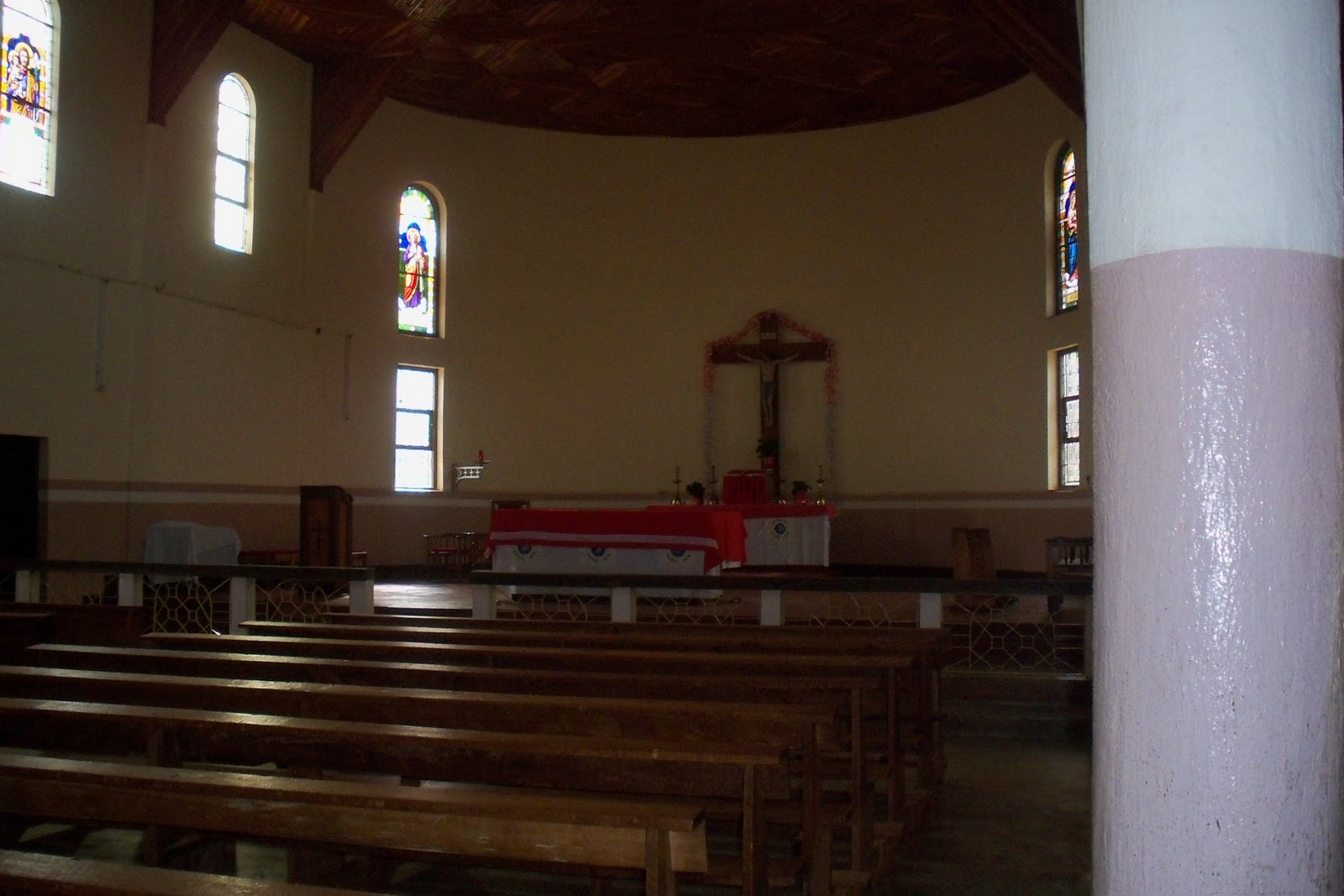
I am going home to visit soon (almost joy level) and I will not be present for Fidesta's form 4 graduation. However, last Sunday there was a celebration to commemorate form 4 graduation from religious studies at the local Catholic Church.  Fidesta invited me to come.  Of course I agreed, not realizing that there would be very few adults present, only those who had been invited to speak and to be guests of honor. The celebration was in the old, small church where we meet for the charismatic service, and guests of honor sat at the head table up on the altar.  I bet you can guess where I was seated, right up there where all could see me.  I really hate being the center of attention, but the seat gave me a good view of all the students.

Fidesta was sitting near the window in the first row.  I tried to blend into the surroundings and just listen and watch all that was happening.  I listened to the speaker and really did not understand much of what he said, other than that it was an inspirational message for these young people who are about to go out into the world on their own.  During the ceremony, I happened to look over at Fidesta, and the sun was shining in that window and was illuminating her face. I saw that she was looking at me.  I smiled at her and her face lit up.  At that moment, I am sure that I saw joy!  She was literally glowing and I marvel at the thought.  Maybe God really has given her a future and a hope.  Maybe God really did hear her praying and sent her His love.  I hope she always remembers that feeling and remains strong in her faith.


While I was sitting there thinking about Fidesta, a thought popped into my head.  (I am sure this is the way God communicates with me).  He said, "give her your necklace."  I have this cross encircled by a heart that I have worn every day since I have been here.  My mother gave me the necklace, and I really love her and I love that necklace.  I tried to argue with the thought.  I told myself that I had already given her a card in which I had written a nice heart-felt message. Wasn't that enough?  Apparently not because again I heard, "Give her the necklace."  I continued to find excuses so that I could keep my necklace.  I would buy her a cross when I go to America.  Wouldn't she like a new one better than mine?  No.  "Give her your necklace!"  After using every excuse and not really believing them myself, I knew what I would do.  As we were walking home, I stopped her and taking off my cross, I explained how much it meant to me.  I told her that I would only be in her life for a short time, and I wanted her to have my cross to remember that her mothers, the one in heaven and the one on earth, love her very much and are very proud of her.  I put it on her, and through her tears, I again saw joy.

Traveling to the market on the bus one day, Fidesta was sitting with a young man and he was crying.  Fidesta asked him what was wrong and he told her that he had come to town to escort his wife and their new baby home from the hospital.  However, he did not have enough money for the bus fare, and they would have to get off the bus and walk the rest of the way home.  Fidesta took the pocket money that I had given her and gave it to that man.  She told me that it had given her a most unusual feeling, because she had never before been in a position where she could give.  Usually she was the one in tears.  I made sure not to replenish her money at that moment, because I wanted her to think about that feeling and keep it in her heart, just as I am hoping she will remember her feeling of joy.

On a lighter note, the children at my aunt's church in New Hampshire donated school supplies to my neighborhood primary school.  Aggie accompanied me to the school, and she insisted on carrying the box on her head.  The headmistress was delighted with the gifts and called an impromptu assembly on the parade ground so that I could distribute them.  Each student received a pencil and a handshake from Mzungu.  Erasers and other things were given to student leaders and other students chosen by the teachers.  There was an old man standing nearby.  I thought he had stopped to watch the celebration and to listen to the enthusiastic shouts of the children.  The headmistress told me to give him a gift and she handed me a pen.  Nice thought, but you see, this man was blind.  Aggie took a picture of me giving a blind man a pen!


My fundi made me a new blue dress.  The girls asked me what style I had chosen.  I said I did not choose.  It would be a surprise.  When I put it on to wear to school, Fidesta told me that if I were to be married in Tanzania, I would be worth no less that 30 cows! (She really knows how to flatter me).  When I walked into my form 6 classroom, all my students were already standing at attention (not common for them) and had their hands over their eyes.  They removed them in unison and said "wow"!  I am supposed to wear this dress to America.

Worship


August 25, 2010

My thoughts seem to be occupied with the thought of being at home (USA) again, taking hot showers, having clean feet, eating pizza and ice cream.  I leave Dar on September 15 heading for London and then on to DC.  It is a 2 day trip home and 3 days to return.  That is not counting the day long bus rides from Mkuu to Dar.

Meanwhile, I continue to throw myself into the experience of living here in Tanzania.  (Aggie and Fidesta said that I am the African and they are the wazungu).  My latest insights are into ways of worship.

Recently, Aggie asked me to join a small community prayer group with her.  She does not know many people here, and I think she wanted my support.  We meet in homes or at the local primary school for about an hour very early (6:30 am) every Saturday morning.  At the end of our first meeting I was asked to host the next meeting.  What could I say except, "Of course, I would love to host"!  I knew Aggie and Fidesta would help me, but Aggie said that I was to do the reading and give the reflection, in KISWAHILI!  That unnerved me a bit, but the reading was short: "Jesus blessing the little children".  That week I wrote my reflection in English, and then translated it into Kiswahlil.  I asked the girls to proof it for me, and they were amazed that there were very few mistakes.  I told them that I write much better than I speak.  (I think that is true in both my current languages).  Saturday morning came and mostly little children attended (seems fitting). I read my reflection, and they seemed to understand what I was saying.  The older girls read over my shoulder.  However, I did not ask for questions because I was afraid I would not understand them.  I like the small group.  The meetings are short and quiet, I understand a few words here and there, and I have to interact with a only few people at a time. 


Now Fidesta has also asked me to join her at a Charismatic Catholic service.  They meet on Saturday afternoons.  In America I attended the Catholic church for many, many years, and for the life of me, I could not even visualize what a charismatic Catholic would be like.  Charismatic Catholic?  Is that an oxymoron?  However, I agreed to go with her.  Aggie refused, and she is Catholic too.  Oh no, what adventure was waiting for me now?

Well, the service was actually more like a contemporary service might be like in our country, only more passionate than any service I have ever attended.  There was much singing and dancing, and you just seem to move about as you feel compelled.  The songs tended to be just a few repeated words, so I was easily able to sing them, or versions of what I thought the words might be. (Who knows what I was really saying).  Prayers were individual prayers spoken aloud (loudly and passionately) in unison.  It was almost like the church was alive.  In America I tend to be on the more inhibited side during church services, singing only loudly enough for me to hear and saying my prayers silently to myself, but by the end of this first service with Fidesta, I definitely felt my level of charisma increasing.  When I come home in a few weeks, you may not even recognize me because I will be so charismatic.  During the service, I was singing and dancing and wishing I could ululate like Fidesta.  (Ululating is making this really loud whooping-like noise by wiggling your tongue rapidly back and forth.  It is an expression of great joy).  Unfortunately, I can barely whistle.  The padre announced each reading and gave us time to look them up in our Bibles.  I looked over the shoulder of the young man next to me to see the verse and then found it in my Bible.  Being able to read the verse in English really helped with my understanding.  At the end of the service, all visitors were asked to stand and introduce themselves.  Everyone was tickled pink when I spoke in Kiswahili, and they all wanted to shake my hand.  After introductions, newcomers were called to the altar.  I thought this was so everyone could see us and greet us. Then someone from the congregation came and stood in front of each one of us.  The kind old gentleman in front of me told me to close my eyes, and then he turned my hands upward and put his hand on my head.  The congregation began praying aloud with the same energetic passion that they had used earlier, maybe even more so.  I am sure that if I had had any demons remaining after my experience in Morogoro or if I had acquired any new ones since, they have now all run away with their tails between their legs.  It was very moving, although I don't understand why the visitors from this past week were not treated to the same experience.  Maybe it had been for my benefit.

On the way home, Fidesta asked me if would I come again with her?  Did I like the service? I told her certainly.  It was a wonderful, uplifting way to worship God through song and dance and prayer. Fidesta really likes charismatic. Others, like Aggie, prefer traditional ways of worship.  Is it not the same in our country?  I guess I like variety, because now I go to small prayer group on Saturday morning, Charismatic on Saturday afternoon, second mass on Sunday morning, and each Tuesday and Friday, as I return from the market, I stop at the church to pray.  However, I must admit that that is my favorite time, because the church is empty and quiet and I am no longer "mzungu".  I am just me, alone with my God.

Field Trip

   August 14, 2010

I have just returned from a field trip to Ngorongoro and Lake Manyara National Parks.  I traveled with the form 3 students who were able to afford the trip, the school secretary, and about 5 other teachers.  I had a great time!  I saw many African animals in both parks and the landscape was amazing, despite the dust.  The parks are actually in a volcanic caldera (crater).  This area (Arusha, Serengeti, Ngorongoro) is also home to the Maasai people.  They are very colorful, interesting people.  Traditionally they were nomadic herders and lived in small, round, grass huts.  They are known for wearing colorful robes and much jewelry.  Some of them have elongated earlobes as a result.  I was able to take a picture of a young Maasai boy.  It only cost me my package cookies.

I have been on field trips with students in America, and in many ways this was similar.  The students were typical adolescents: singing, talking with friends, and making lots of noise on the long bus ride to the park.  We left very early in the morning (3:30 am) on two chartered buses.  They were nicer than the typical town bus in Tanzania, but still, many windows did not close, and many students had to sit on the floor or on other students' laps. Our one bathroom break was a quick stop by the side of the road in the dark, girls to one side, boys to the other. I decided to wait for better accommodations.

We arrived at Ngorongoro between 10:00 and 10:30 am and encountered the first of our financial problems.  The park officials wanted to charge me the "mzungu" price (about $50 park entrance and another $200 to go down into the crater).  That is more than an entire month's living allowance! However, after much negotiation, the second master was able to convince them that I was, indeed, serving Tanzania as a teacher and should not be charged.  (I may speak kiswahili and dress like a Tanzanian, but I still look like a foreigner).  I felt that it was unfair that in both parks, it was much easier for foreigners riding in Land Cruisers to gain entrance (or exit) than it was for groups of Tanzanian school children wanting to learn about their own country.  One group of primary school children could not enter Lake Manyara National Park because the entrance fees were too high.  They did not have enough money, so they had to turn around and go home with a busload of disappointed children.

We ran into a similar predicament.  The trip into Ngorongoro the first day cost more than expected, so the teachers and second master decided to return to school the next day without going to Lake Manyara (the trip was scheduled for 2 nights, 3 days). The students were very upset.  They all walked off the bus in protest.  I told the second master that he had helped me save a lot of money by getting me into the park as a Tanzanian teacher, so I would loan (more likely give) them the money to get into Lake Manyara.  That satisfied the students for the moment.


The crater (caldera) was amazing!  We had to split into two groups (morning group and afternoon group) and ride down in the park bus.  You are not allowed to get out of the bus (wild elephants are especially dangerous) so taking pictures was not easy, but I managed to get some.  However, if you are afraid of heights, you probably would not have enjoyed the trip down into the crater.  The secretary sat beside me with her eyes closed and her lips moving in silent prayer.  The road was narrow and winding and dusty.  The bus was big. The descent was long and steep.  She was afraid that we might take an unexpected short cut to the bottom and that we would not survive.  I told her if that were true, then why worry?  I am not sure if that calmed her, but when we reached the bottom, the trip was worth it.  Beautiful scenery! (See my facebook pictures)  Lake Manyara was the same but not as dry.  Animals (wildebeasts, zebras, baboons, warthogs, giraffes) as far across the plains as the eye could see.  I was living the "Lion King."


After visiting Ngorongoro National Park, we boarded the bus for our lodging site: Manyara Secondary School.  It was late when we arrived and despite the fact that they knew we were coming, they were not prepared for our arrival.  They had no extra cots and very little water at the school.  There was a lot of bustling about, doubling and tripling students in one bed, and moving mattresses, but finally, we each had a space to sleep, and grown-ups did not have to sleep together. That was a plus.

I mentioned that it was dusty.  That was an understatement.  I was coated with dirt.  I longed for a long hot shower but would settle for even a quarter of a bucket of water to wash my hair.  Water had to be carried from the well, but I made friends with the matron of the hostel, and she gave me water, let me use her own private outdoor toilet/shower stall, and gave me her phone number as well.

Food was also another problem.  We had eaten 2 maandazi (fried donut-like cakes), a handful of peanuts, and had had a cup of tea when we arrived at Ngorongoro.  Now we were all very hungry.  The problem is that on Tanzanian field trips, you bring your own food and the students (girls) cook it.  They prepared only rice the first night, because it was very late. Cooking over a wood fire takes a long time.  I was exhausted and fell asleep before eating (midnight).

I really did not get too much sleep because we were in a hostel (many beds in the same room), and the girls woke me up with their chatter when they came in.  They also seem to like to sleep with the overhead lights turned on.  Before the trip, I had asked what to bring and was told I did not need anything, so I did not bring sheets or a blanket.  Luckily, like all good Tanzanian women, I travel with a kaanga (a large, versatile piece of cloth that can be worn as clothing, used as a head scarf, as a towel, an apron, or even a light blanket or sheet). After bathing, I spread it on my mattress to use as a sheet.  I wore my athletic pants and a long sleeved t-shirt for pajamas and was very grateful that Aggie had reminded me to bring my fuzzy socks.  I used my skirt as a blanket and my blouse to cover my head to block out the light.  I am sure that the students were very curious as to why Americans sleep this way, but it seemed to entertain them.

The next morning we had tea and maandazi and peanuts again, and then we left for Lake Manyara.  It was a good day, and we saw many animals.  We were even allowed to get off the bus at a couple of places.  The giraffes came up close to the bus and seemed to enjoy posing for pictures.  However, when the big elephant walked by, we were told to remain very quiet and still.  Elephants have been known to charge vehicles. We returned to the school in the afternoon, and I was relaxing on my bed, waiting for food to be prepared. Then some students came in and said to get my things together.  We were returning to Mkuu.  Apparently we did not have enough money to pay for another night's accommodations.  (How much could this place really cost)?  However, we loaded the buses and began our journey home: tired, dirty, and without dinner once again.  Unlike in our country, here there are no fast food places where you can stop with two bus loads of hungry kids.  The only food that we had with us were bags of uncooked onions, greens, rice. It was quieter on the ride back home.


We arrived at school at about 11:00 pm.  This meant that the students had to stay overnight at school, and the secretary would stay with me.  The parents were not expecting their children until the next day, but that would not have made a difference.  In Tanzania, there are no parents waiting in the parking lot in warm cars to take their students home.  Feet are the primary mode of transportation, and traveling by feet in the dark can be hazardous to your health.

Despite the difficulties, I enjoyed seeing new parts of Tanzania.  It truly is a beautiful country.

Conversation

August 10, 2010

I knew that I was missing something but really could not figure out what it was.  I would be standing by the roadside waiting for a bus, just wishing that someone would stop and talk to me.  I would find myself wanting to get on the bus and just go somewhere, anywhere, where I would find someone to whom I could talk and who would really understand.  However, I knew that it was only a pipe dream; it would not matter where I went, I would not find what I was looking for.

Wednesday I spent the day in Moshi visiting with Gary, my friend and neighbor from Apex.  He was doing some work in Tanzania and made time to come and see me!  (Thank you Gary) We met at an outdoor restaurant, ordered a cup of tea, and began to talk.  When I first checked my watch, I was surprised to see that four hours had passed.  It had seemed like only minutes. We moved restaurants to have lunch, but continued talking for another couple hours.

On the bus ride home, I realized what it is that I am missing here: conversation.  Not just quick greetings and "how is your day?", but real conversations.  Meaningful conversations that make you feel like you have accomplished something.  Conversations that make you think.  Being surrounded by people in a foreign land is often a very lonely place to be.

Monday, October 18, 2010

Updates

July 10, 2010

Thanks for all your prayers and good wishes.  My father is showing improvement.  In fact, I am happy to say he has not been such a good patient because it shows his spirit is still there.  He refuses to lay in the bed during the daytime.  He insists on sitting up in a chair.  He also insists on feeding himself although his coordination is not so good.  My brother says that my dad is very aware of what is going on, but has much difficulty speaking and he cannot write.  Monday he will be moved to a nursing home near my parents home for rehabilitation for a month or two.  It will be much easier for my mother to have him closer to home, but I know it is hard for her to be alone in that big house after so many years together with him.  His heart surgery will be scheduled after several weeks of rehab, maybe about the time that I am scheduled to go home.

Things continue to be busy and life very full here in Mkuu.  How often do you wash your hair in the US and have the rinse water turn brown?  Every day here during the dry season, although I guess I am lucky to have water in my bucket to wash it with.  Food, not so exciting.  The other day I must have had a craving for high fructose corn syrup and red 40, because I ate a whole package of Twizzlers that my sister-in-law had sent me.  The girls are great cooks and Aggie knows how to spice up the beans, but ugali (stiff porridge) loses its appeal pretty quickly.  The girls were laughing at me because we had vegetable sauce with ugali the other night and I saved my piece of okra and my other large piece of vegetable (looks like a yellow tomato) for last, just like Tanzanians do with their few pieces of meat.  I taught them both how to make banana bread on a hot plate (double cooking pot method to make a little oven) and Fidesta regularly makes it for me now.  Mchaga people are known for ndizi (green cooking bananas) and avocados.  Because I like both, I tell the girls that I am Mchaga Marekani (the American branch of the Mchaga tribe).  Fidesta has taught me a few kichaga words and I entertain the bibis (grandmas or old women) at the market with my delightful conversation.
Yuda is in school, and I cannot wait to talk to him and find out how he likes it.  Unfortunately, I cannot pick up a phone and call, or even text, or send an e-mail.  In a couple of weeks I will take a small crowded (understatement) bus to Shauritanga to visit him.  Fidesta returns to the hostel tomorrow and school begins Monday.  I am sure she will return to visit me and Aggie often, and she will stay with me after taking her national exams in October as she awaits her results. Her scores on these exams will determine whether she will be accepted at an A-level school. I bought several review books for Fidesta and Aggie to share as they study for exams.  Aggie seems to have adjusted to the environment and seems to be happy.


It is much colder here than in Dar or Morogoro and definitely NY and NC in July.  I use two wool blankets at night and even take a lightweight one to school with me during the day.  The buildings do not have heat and most of the windows are missing or broken, so it can be very windy in the staff room.  Some days I walk up the hill to school and the sun is shining and there are no clouds in the sky but it feels like it is raining.  I think the wind is blowing snow off the ice fields of Kibo peak and carrying it right over our school.

More good news.  My students are getting a new physics teacher Monday.  He is a university student from Moshi.  Hopefully he will help them learn some physics topics before the exam.  I have prepared notes on current electricity because I was planning to teach them, but now I will gratefully give them to the new teacher.  We also have a new headmaster.  He begins Monday as well.  He is experienced and seems nice.  He stopped by my classroom when I was teaching yesterday just to say hello.  My one concern is that we will have a whole week of celebration and school meetings this week, and I will not be able to teach my form 6.  We'll see.

Thanks again for all of your kind words.  They really meant a lot to me.  Hopefully I will see many of you in September when I come home to visit the good old USA!  I cannot wait!